Make Every Website Page Clearer, More Relevant & Easier to Find
On-page SEO is more than adding keywords to a page. I help businesses improve search intent, titles, headings, content, internal links, images, structured data and page experience so visitors and search systems can understand what each page offers.
p>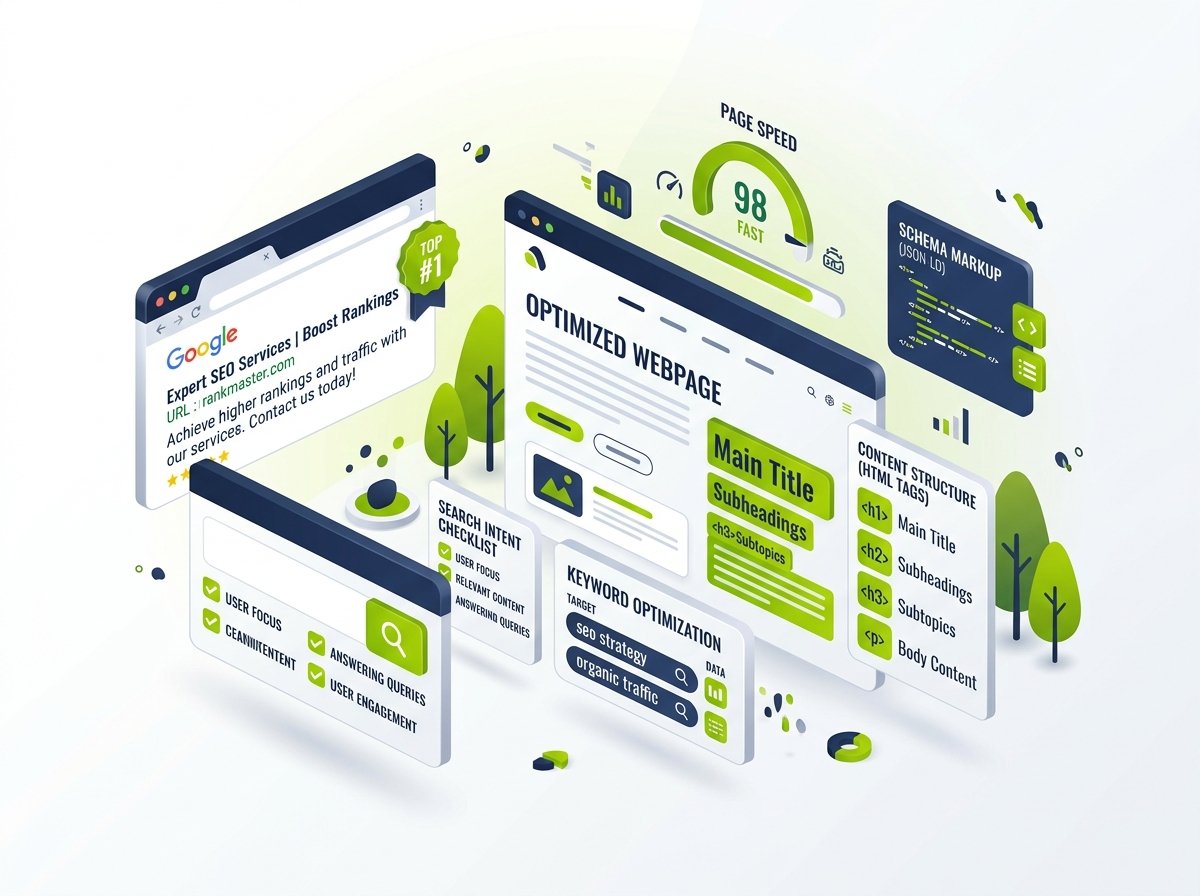
What Is On-Page SEO?
On-page SEO is the process of improving the content and HTML elements of individual web pages so search engines and visitors can understand the page topic, relevance and purpose.
It includes SEO titles, meta descriptions, headings, keyword targeting, search intent, content quality, URL structure, internal links, image optimisation, structured data and the way a page guides users toward the next step.
When these elements work together, a page can provide a clearer answer to the searcher, communicate the value of a product or service and make it easier for people to navigate the website.
On-Page SEO = Relevance + Clarity + Useful User Experience
Each important page should target a clear intent, answer the right questions and make the next action easy to understand.
Why Is On-Page SEO Important for Your Business?
If a page does not clearly match what people are searching for, it can struggle to earn visibility or turn visits into enquiries. On-page SEO helps connect your content with the needs of potential customers.
Improve Search Relevance
Align page titles, headings and content with the topic and intent behind your target searches.
Attract Better-Fit Visitors
Help the right audience understand that your page addresses their question, product need or service requirement.
Make Pages Easier to Understand
Use clear structure and useful information so visitors can find answers without unnecessary effort.
Support More Qualified Enquiries
Explain your offer clearly and guide visitors toward a relevant action, such as contacting your business.
Strengthen Internal Discovery
Connect related pages so visitors and search engines can find important content across your website.
Prepare Content for AI Search
Organise helpful, specific information so modern search experiences can interpret the topic and its context more easily.
What Can Hold Your Website Pages Back?
A page can look polished but still miss important search and usability needs. These are common issues I check before deciding what to improve.
Unclear Search Intent
The page targets a keyword but does not answer what the searcher actually needs.
Weak Titles & Metadata
Titles and descriptions are vague, duplicated or do not communicate the page’s value.
Poor Heading Hierarchy
Headings do not create a clear content structure or help readers scan the page.
Thin or Repetitive Content
The page lacks useful detail, specific answers or information that distinguishes it from competing pages.
Weak Internal Links
Important pages are difficult to discover or lack helpful links to related resources and services.
Unoptimised Images
Images have unclear file names, missing useful alt text or unnecessary file sizes.
Missing Structured Data Opportunities
Relevant schema opportunities have not been reviewed or implemented correctly.
Weak Conversion Path
Visitors cannot easily understand what to do next or why the service is relevant to them.
Content Not Built for Questions
Useful customer questions are left unanswered or buried in long blocks of text.
How Sonia Akter Helps Optimise Your Website Pages
I review the purpose of each important page and improve the elements that influence relevance, clarity, discoverability and the visitor journey.
On-Page SEO Audit
Identify page-level issues and prioritise practical improvements.
- Title and meta description review
- Heading hierarchy analysis
- Search intent alignment
- Content depth and quality review
- Keyword targeting checks
- Internal linking review
- Image SEO checks
- Page-level schema opportunities
- Conversion path recommendations
SEO Title & Meta Description
Make search snippets more relevant and useful to potential visitors.
- Page-specific title tags
- Primary keyword placement
- Secondary topic alignment
- Unique meta descriptions
- Search intent matching
- Duplicate metadata review
- Clear value proposition
- Click-through appeal without misleading claims
Heading Structure Optimisation
Organise page information into a clear hierarchy for people and search systems.
- H1 review
- H2 and H3 structure
- Topic-led section planning
- Question-based headings
- Semantic relevance
- Content hierarchy improvements
- Scannability and page flow
Content Optimisation
Improve page copy so it answers the audience’s needs and explains your offer clearly.
- Search intent alignment
- Content gap analysis
- Thin content improvement
- Paragraph structure
- Helpful examples and details
- Trust and expertise signals
- Human-first editing
- Clear calls to action
Keyword Placement & Semantic SEO
Use relevant terms naturally without forcing repeated keywords into the copy.
- Primary keyword placement
- Related keyword integration
- Natural supporting phrases
- Entity and context clarity
- Keyword stuffing review
- Search intent matching
- Topical depth improvements
Internal Linking Optimisation
Help visitors discover related pages and make important content easier to reach.
- Relevant internal link opportunities
- Descriptive anchor text
- Service and topic connections
- Orphan page checks
- Navigation and content links
- Links to conversion-focused pages
Image SEO & Alt Text
Make images more useful, accessible and relevant to the page around them.
- Descriptive alt text
- Image file name guidance
- Contextual image placement
- Image size and compression review
- Product and service image checks
- Accessibility considerations
FAQ & AEO Content Optimisation
Answer real audience questions with direct, clear and well-structured content.
- Customer question research
- FAQ content planning
- Answer-first formatting
- Featured snippet opportunities
- Conversational search queries
- Voice-search-friendly wording
- Helpful short answers
Schema & Structured Data Review
Review appropriate structured data that can help search engines interpret page information.
- Article schema opportunities
- Service and organisation information
- Breadcrumb schema
- Product schema where relevant
- FAQ structured data eligibility review
- Validation and error checks
AI Search & GEO Content Readiness
Make important page information clear, specific and easy to interpret across changing search experiences.
- Clear answer sections
- Entity and brand context
- Specific product or service information
- Question and comparison coverage
- Supporting topic connections
- Google AI Overviews readiness review
- AI search visibility monitoring opportunities
URL & Page-Level SEO Review
Check page-level elements that affect clarity, consistency and discovery.
- Readable URL structure
- Duplicate page review
- Canonical signal checks where relevant
- Broken link identification
- Page indexing checks
- Mobile content usability
- Page experience recommendations
Conversion-Focused On-Page SEO
Help visitors understand the offer and find the next step without confusing or exaggerated claims.
- CTA placement and clarity
- Service benefit explanation
- Trust information placement
- Useful supporting links
- Content flow review
- Contact and enquiry path checks
On-Page SEO for Different Business Goals
The right optimisation depends on what each page is meant to achieve. I adapt the work to the page type, audience, competition and business priorities.
Service Pages
Clarify service intent, benefits, process, FAQs and enquiry paths for potential customers.
Local Landing Pages
Align location-specific information with local search intent and the actual services offered.
Blog & Resource Content
Improve topical coverage, structure, internal links and direct answers to reader questions.
Product Pages
Make product details, descriptions, images and supporting information clearer and more relevant.
Category Pages
Improve category intent, content context, page hierarchy and links to relevant products or subtopics.
Landing Pages
Connect the target query with a focused message, useful evidence and a clear next action.
How I Optimise Website Pages
I use a page-by-page approach based on search intent, current performance, content quality and business goals rather than applying the same checklist to every URL.
Understand the Page & Business Goal
Review the audience, service or product, target market and the action the page should support.
Audit Current On-Page Elements
Check titles, metadata, headings, content, internal links, images, structured data and usability.
Review Search Intent & Keywords
Determine what the target audience expects and whether the page answers that need clearly.
Prioritise Content Improvements
Identify gaps, unclear sections, duplicate elements and opportunities to make the page more useful.
Optimise & Connect the Page
Improve relevant content elements and add useful internal links and appropriate structured data.
Measure & Refine
Monitor impressions, clicks, queries, rankings and conversions where tracking is available, then refine the page based on evidence.
Improvements Your Business Can Work Toward
On-page SEO cannot guarantee a ranking position or a specific business outcome. The aim is to remove avoidable page-level barriers and make your content more relevant, useful and accessible.
Clearer Search Relevance
Align page content with the subject and intent of relevant searches.
More Useful Search Snippets
Write accurate titles and descriptions that explain what the page offers.
Better Content Structure
Make important information easier to scan and understand.
Stronger Internal Discovery
Help users and search engines navigate to related, useful pages.
Improved Page Experience
Identify content and usability issues that make a page harder to use.
More Relevant Enquiries
Make the offer and next step clearer for visitors who match your audience.
Better Answer Coverage
Address useful customer questions through clear and well-organised content.
AI Search Readiness
Improve context and answer clarity for modern search experiences without promising inclusion.
How On-Page SEO Supports Modern Search
Traditional search results remain important, while people also use answer engines and AI-powered experiences to research services, compare options and get explanations. Clear, helpful content supports understanding across these journeys.
Search Intent & Helpful Content
Answer the question behind the query, provide relevant details and avoid adding content just to repeat keywords.
AEO: Answer Engine Optimisation
Use direct answers, descriptive headings and useful FAQ content where they genuinely help the reader.
GEO & AI Search Context
Make brand, service, product and topic relationships clear. AI visibility still depends on many factors and is not guaranteed.
Why a Basic SEO Checklist Is Not Enough
Adding a keyword to a title or publishing a few headings does not automatically make a page useful or competitive. Each change should support the page’s purpose and the audience’s needs.
Optimising Without Intent
A page can use the target keyword but still fail to answer the real question.
Writing for Search Engines Only
Repetitive wording can make the page harder to read and less useful to potential customers.
Ignoring the Full Journey
Even relevant content needs a clear structure and an appropriate next step.
What Clients Say
Use this section for verified client feedback. Replace these editable placeholders only with authentic reviews you have permission to publish.
Verified Client Name
“Add a verified client review here. Choose feedback that explains the business problem, communication quality and useful outcome.”
Verified Client Name
“Add another authentic review here. Specific operational details build more trust than generic praise.”
Verified Client Name
“Add a permission-safe review here that reflects real experience without inventing rankings, revenue or guarantees.”
On-Page SEO Questions, Answered
What is on-page SEO?
On-page SEO is the process of improving individual web page content and elements such as titles, headings, metadata, keywords, internal links, images and structured data to make the page clearer and more relevant to users and search engines.
Why does my business need on-page SEO?
It can help your important pages better match relevant searches, explain your offer clearly, improve navigation and support more qualified visits and enquiries. Results depend on competition, website quality and other SEO factors.
What is included in on-page SEO services?
Services can include an on-page audit, title and meta description optimisation, heading improvements, content and keyword optimisation, internal linking, image SEO, FAQ and answer content, structured data review and conversion-path recommendations.
How does Sonia Akter approach on-page SEO?
I review the page purpose and audience, audit its current elements, analyse search intent, prioritise content and structural improvements, optimise relevant elements and monitor available performance data.
Does on-page SEO mean adding more keywords?
No. Keywords should be used naturally in relevant places. The page should answer the searcher’s intent and provide useful context rather than repeating the same phrase unnaturally.
Can on-page SEO improve Google rankings?
On-page improvements can help search engines understand a page and its relevance, but rankings also depend on competition, site quality, authority, technical factors and many other signals. No specific position can be guaranteed.
How long does on-page SEO take?
Implementation time depends on the number and complexity of pages. Performance changes can take time to appear and vary by site, competition, crawling, indexing and the wider SEO strategy.
Can on-page SEO help with AI search visibility?
Clear, useful and well-structured content can help AI-powered search systems interpret a page, but appearance in ChatGPT, AI Overviews or other AI experiences is not guaranteed.
Should every page have an FAQ section?
No. Add FAQs when they answer real questions that are relevant to the page and useful to visitors. Do not add repetitive or unrelated questions just to make a page longer.
How do you measure on-page SEO performance?
Depending on available tracking, I review metrics such as search impressions, clicks, queries, click-through rate, rankings, page engagement and conversions to understand what may need further improvement.
Let’s Build an On-Page SEO Strategy Around Your Business Goals
If your important pages are not attracting the right search visibility or enquiries, an on-page SEO review can help identify practical opportunities across content, structure, relevance and user experience.