A business can be excellent at what it does and still lose customers to a competitor three streets away.
Not because its services are worse. Not because its prices are higher.
Because when someone searches Google for a nearby service, that business is nowhere to be found.
Think about a homeowner in Dallas searching for “AC repair near me” on a hot afternoon.
They’re not browsing for entertainment. They have a problem, they need someone reliable, and they’re likely to contact one of the businesses they find first.
Your company doesn’t appear in those local search results, you may never get the opportunity to earn their business.
That’s where a focused Local SEO strategy can make a difference.
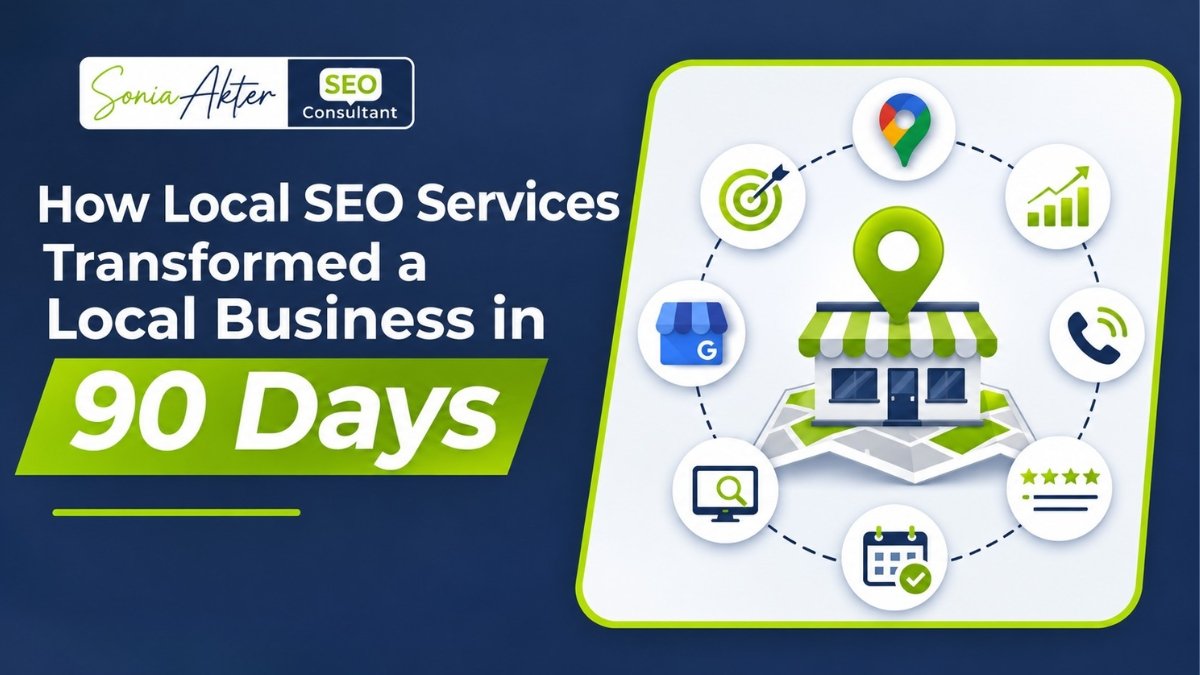
To show how this works, let’s walk through an illustrative 90-day Local SEO improvement project for a home service business in the United States.
This example follows a realistic optimization process rather than claiming results from a specific client.
The Starting Point: A Good Business That Was Difficult to Find
Imagine a family-owned HVAC company serving homeowners in Dallas, Texas.
The business has experienced technicians, positive feedback from existing customers, and a website explaining its heating and cooling services.
Most of its new customers, however, come through referrals or repeat business.
Its website receives occasional visits, but very few inquiries originate from local Google searches.
The owner notices something frustrating.
Competitors appear in Google’s local map results for searches such as:
- AC repair Dallas
- HVAC contractor near me
- Emergency air conditioning repair Dallas
- Furnace repair Dallas TX
Meanwhile, the company struggles to appear prominently for those same searches.
The problem isn’t necessarily the quality of its work.
It’s that Google and potential customers don’t have enough clear, consistent information to evaluate the business confidently.
Before making changes, the first priority is understanding why.
Days 1–30: Fixing the Local SEO Foundation
The first month isn’t about publishing dozens of blog posts or adding the word “Dallas” to every page.
It’s about identifying the obstacles preventing the business from being discovered.
1. Auditing the Google Business Profile
A Google Business Profile is often one of the first places customers encounter a local business.
For an HVAC company, that profile should clearly communicate its services, service area, business hours, and contact information.
The initial audit examines:
- Whether the primary business category accurately represents the company
- Whether relevant additional categories are appropriate
- Whether the service areas reflect where technicians actually operate
- Whether the phone number, website, and business hours are correct
- Whether the profile includes genuine business photos
- Whether important services are accurately described
For a service-area business, address settings also matter.
A company that visits customers at their homes should configure its profile according to Google’s eligibility and address-display rules.
The goal isn’t to make the profile look busy.
It’s to make it accurate, complete, and useful.
2. Understanding What Local Customers Actually Search For
Local keyword research is more specific than collecting high-volume keywords.
Consider these two searches:
“How does an air conditioner work?”
“Emergency AC repair in Dallas”
Both involve air conditioning, but the person behind each search has a different goal.
The first person probably wants information.
The second may need to book a technician immediately.
A useful Local SEO strategy identifies the searches most closely connected to the business’s actual services.
For this HVAC company, those might include AC installation, air conditioning repair, emergency HVAC service, and seasonal maintenance.
Each keyword is evaluated for search intent, geographic relevance, and whether the business genuinely provides the service.
3. Correcting Website and Business Information
Next comes the website audit.
Can a visitor immediately understand what the company does and where it operates?
Is the phone number easy to find on mobile?
Does the contact form work?
Are the service pages indexable?
Is the business information consistent across its website and important third-party listings?
These questions sound basic, but they can reveal problems that affect both local visibility and conversions.
A website doesn’t need an elaborate design to generate leads.
It needs to answer the right questions and make the next step easy.
Days 31–60: Making the Website Relevant to Local Buyers
Once the foundation is in place, the second month focuses on helping customers find the specific services they need.
4. Improving Service Pages for Local Search Intent
One common mistake is trying to rank a homepage for every service.
An HVAC business might offer air conditioning repair, heating installation, emergency repairs, and maintenance.
Those services solve different customer problems.
Rather than forcing them onto one page, the business can improve dedicated service pages.
A strong AC repair page should explain:
- What types of AC problems the company handles
- Which areas it serves
- What customers can expect when requesting service
- How to schedule an appointment
- What makes the company a credible choice
It should also answer practical questions.
For example, homeowners may want to know whether a malfunctioning AC unit needs repair or replacement.
Useful answers help visitors make decisions instead of simply repeating search keywords.
5. Building Location Relevance Without Creating Thin City Pages
Businesses serving multiple cities often assume they need a separate page for every nearby location.
That approach can create dozens of nearly identical pages with little value.
Instead, the HVAC company identifies its genuine service areas and determines where unique location-specific content would help customers.
A useful location page might explain the services available in that area, relevant operational details, and genuine examples of local work when available.
Simply replacing “Dallas” with “Plano” throughout the same page isn’t a meaningful Local SEO strategy.
Google needs to understand geographic relevance, but customers also need information they can trust.
6. Strengthening Internal Linking
Internal links help visitors move between related services and help search engines understand the website’s structure.
For example, a guide about common air conditioner problems could naturally link to the company’s AC repair service page.
A seasonal maintenance article might direct readers to an HVAC maintenance page.
The links should follow the reader’s next logical question.
They shouldn’t exist just to insert another keyword.
This is also why I consider website architecture and internal linking important parts of a broader SEO consulting strategy.
A well-organized website makes it easier for visitors to move from researching a problem to considering a service.
Days 61–90: Building Trust and Improving Lead Generation
By the third month, the website and Google Business Profile should have a clearer foundation.
Now the focus shifts toward credibility, visibility measurement, and conversion improvements.
7. Creating a Consistent Review Process
Customer reviews influence how people evaluate local businesses.
For home services, they can be especially important.
A homeowner inviting a technician into their house wants confidence that the company is professional and reliable.
The HVAC business can introduce a simple process for requesting honest reviews from customers after completed jobs.
It can also respond professionally to feedback.
The objective is to collect genuine customer experiences, not manufacture five-star ratings.
Review incentives, misleading testimonials, and review gating should be avoided.
8. Improving Local Business Citations
A local citation is a mention of a business’s identifying information on another website or directory.
The company reviews relevant business listings to check whether its name, phone number, and other applicable details are accurate.
Priority goes to credible, relevant platforms rather than submitting the business to hundreds of low-quality directories.
Local visibility isn’t improved by collecting links and listings indiscriminately.
Relevance, accuracy, and credibility matter.
9. Making It Easier for Visitors to Become Leads
More visibility is useful only when it supports the business’s goals.
Suppose a homeowner lands on the company’s AC repair page.
They understand the service, but the phone number is buried in the footer.
The contact form asks for too much information.
And there’s no indication of the areas the company serves.
Even a highly relevant visitor might leave.
The business can improve that experience with:
- A visible click-to-call option on mobile
- A clear service request form
- Accurate service-area information
- Relevant customer testimonials
- Straightforward calls to action
These changes don’t guarantee more bookings.
They remove avoidable obstacles between customer interest and customer action.
What Should Change After 90 Days?
At the end of the project, the business shouldn’t judge success simply by whether a few keywords moved upward.
A meaningful review compares performance against the original baseline.
| Area | What to Evaluate |
| Google Business Profile | Search impressions, calls, website clicks, and other available interactions |
| Local keyword visibility | Changes in rankings across relevant locations |
| Organic traffic | Visits to important local service pages |
| Lead generation | Qualified calls and completed inquiry forms |
| Conversion performance | Percentage of relevant visitors taking valuable actions |
| Business outcomes | Booked appointments and attributable revenue, where tracking allows |
In this illustrative example, the expected deliverable after 90 days is a stronger local search foundation, clearer service pages, more reliable tracking, and a repeatable process for building trust.
Whether rankings, calls, and bookings actually increase must be determined from measured data.
Some businesses may see improvements within weeks. Others face stronger competition, technical obstacles, or longer timelines.
Ninety days is a useful period for implementing and evaluating an initial strategy, not a guarantee of first-page rankings.
Why Local SEO Matters for Small Businesses in the USA
Local SEO is particularly relevant for businesses whose customers need services within a specific geographic area.
Think about a plumber in Houston, a roofing contractor in Phoenix, or a dental practice in Chicago.
Their customers aren’t necessarily searching for the most popular business in America.
They’re searching for a suitable, trustworthy provider close enough to help them.
That creates an opportunity for smaller businesses.
A company doesn’t have to compete nationally for every broad industry keyword.
It can focus on becoming relevant and discoverable for the services and locations that matter to its customers.
However, local rankings depend on multiple factors, including relevance, distance, and prominence.
No consultant can guarantee that every customer in a city will see the same business in the same position.
The Biggest Mistake: Treating Local SEO as a One-Time Task
One of the most common misunderstandings about Local SEO is that it ends after a Google Business Profile has been optimized.
But businesses change.
Services expand. Competitors improve their websites. Customer questions evolve. Business information needs updating.
A useful ongoing strategy includes monitoring local visibility, keeping business information accurate, improving important service pages, and reviewing lead quality.
It also means paying attention to what happens after someone contacts the company.
Are inquiries relevant?
Are potential customers located within the actual service area?
Are those inquiries turning into booked jobs?
These questions connect SEO performance with business performance.
And that connection matters more than a ranking screenshot.
My Approach to Local SEO: Visibility That Supports Business Goals
As an SEO consultant, I believe local optimization should begin with understanding the business, its customers, and the specific services it wants to grow.
That means looking beyond keywords.
I focus on how technical accessibility, service-page content, Google Business Profile information, internal linking, local credibility, and conversion opportunities work together.
For businesses targeting customers in the United States, a localized strategy should reflect the actual market and customer expectations rather than relying on generic location keywords.
You can explore my approach to SEO services and website optimization to understand how these elements fit into a broader search visibility strategy.
Final Thoughts: Traffic Is Useful. Local Customers Are the Goal.
The real value of Local SEO isn’t simply making a business appear in more searches.
It’s helping the right people discover a relevant business when they need its services.
For our illustrative Dallas HVAC company, the 90-day plan creates a practical path:
Month 1: Understand and correct the foundation.
Month 2: Improve local relevance and service-page quality.
Month 3: Strengthen trust, reduce conversion friction, and evaluate performance.
A business doesn’t need to chase every search query.
It needs to be visible for the searches that match what it genuinely offers.
And when those visitors arrive, the website should make it easy for them to take the next step.
Is your local business getting website visits but not enough calls or qualified inquiries?
Explore my SEO consulting services at Sonia Akter.
I’d also be interested to hear from business owners and marketers:
What’s been your biggest Local SEO challenge — Google Maps visibility, local rankings, or turning visitors into customers?stic guide to technical issues, intent mismatch, content quality, competition and search changes.